
Choosing the right flooring for your home is about more than just aesthetics; it’s about how that floor performs underfoot. In Nottinghamshire, where many homeowners are upgrading to modern heating solutions, Underfloor Heating (UFH) has become the gold standard for comfort. However, the efficiency of your heating system is heavily dependent on the materials sitting on top of it.
If you are considering UFH Nottinghamshire, selecting a floor finish that facilitates heat transfer while maintaining its structural integrity is essential. Here is a guide to the best flooring options to pair with your system.
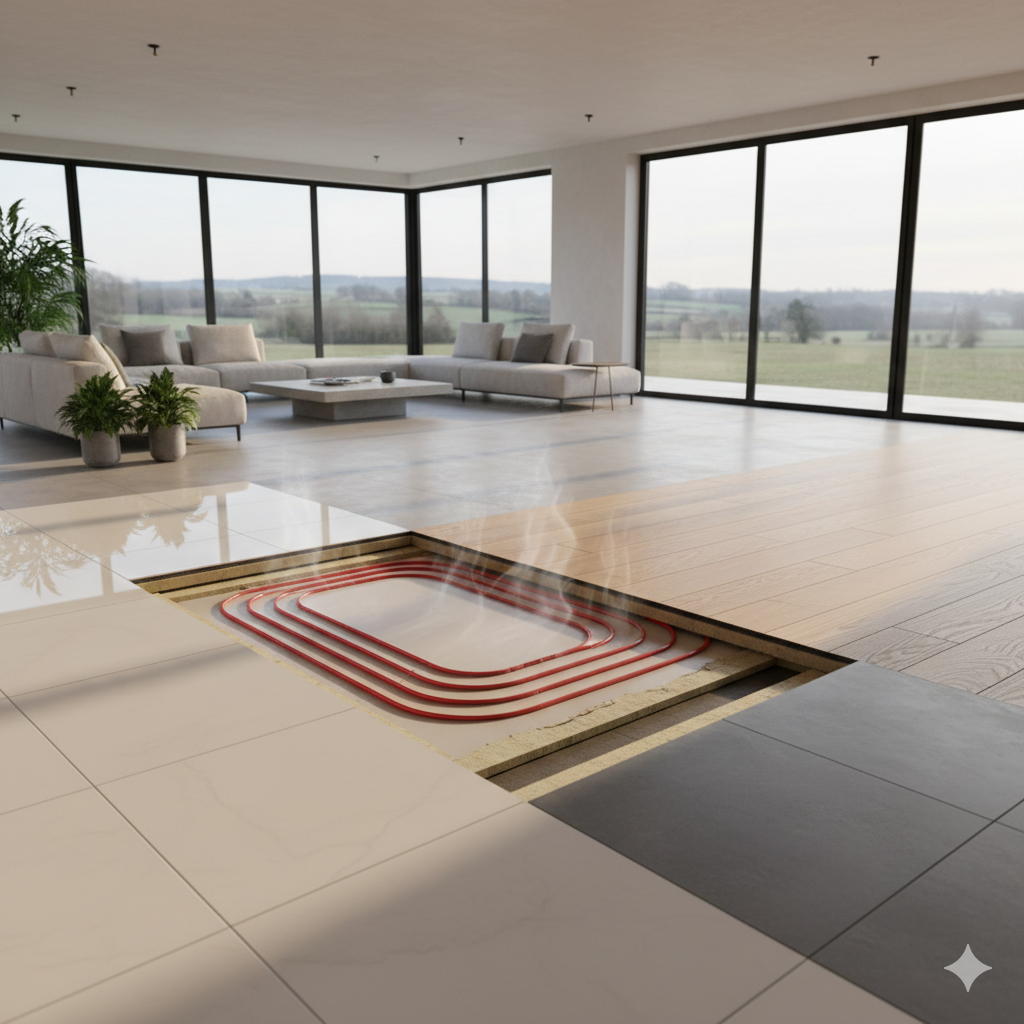
The Foundation: Liquid Screed Nottinghamshire
Before choosing your tiles or wood, the most critical step is the base. For those installing Liquid screed in Nottinghamshire, you are already ahead of the curve. Unlike traditional sand and cement, liquid screed flows around the heating pipes, eliminating air pockets. This creates a seamless thermal bridge, allowing heat to pass through the floor quickly and evenly. It provides a perfectly level surface, which is vital for the longevity of any flooring you choose.
1. Porcelain and Ceramic Tiles
Tiles are widely regarded as the best partner for UFH. They have high thermal conductivity, meaning they heat up fast and retain that warmth for a long time. Because they are cured at high temperatures, they won't warp or crack with the heat cycles of your system. In the often-unpredictable East Midlands climate, the cool feel of tiles in the summer and the radiating warmth in the winter provide the perfect year-round balance.
2. Polished Concrete
For a modern, industrial look, many Nottinghamshire residents are opting for polished concrete. When poured over a liquid screed base, concrete acts as a massive heat sink. It takes a little longer to warm up than tile, but once it reaches temperature, it stays warm for hours after the heating has been turned off. It’s durable, easy to clean, and looks stunning in open-plan kitchen extensions.
3. Engineered Wood
While solid hardwood is generally discouraged with UFH because it can shrink or gap, engineered wood is a fantastic alternative. Its layered construction provides stability, allowing it to expand and contract without damage. It offers that classic, natural aesthetic while still allowing a decent amount of heat to permeate the room. Just ensure the timber is "UFH-rated" and the thickness doesn't exceed 18mm to ensure efficiency.
4. Luxury Vinyl Tiles (LVT)
LVT has exploded in popularity across Nottinghamshire due to its versatility and durability. Most modern LVT is designed to be compatible with underfloor heating. It’s thinner than wood or stone, meaning the response time—the time it takes for you to feel the heat—is very fast.
Final Thoughts
The success of your flooring project depends on the quality of the installation. Starting with a professional application of liquid screed ensures your heating system isn’t working harder than it needs to, saving you money on energy bills and providing a flat, crack-resistant surface for your final floor.
FAQ
Is liquid screed better than traditional screed for UFH?
Yes. Liquid screed has double the thermal conductivity of traditional sand and cement. It also allows for a thinner layer, which means your room warms up significantly faster.
Can I put carpet over underfloor heating?
You can, but you must be careful with the "TOG" rating. The combined rating of the carpet and the underlay should not exceed 2.5 TOG, or it will act as an insulator and block the heat from entering the room.
How long does liquid screed take to dry before I can lay flooring?
Generally, you can walk on liquid screed within 24 to 48 hours. However, it needs time to dry fully before the final floor is laid—usually about 1mm per day for the first 40mm. Using your UFH system (following a specific commissioning cycle) can help speed up this process.
Do I need an expansion gap for wood flooring with UFH?
Absolutely. Even engineered wood will move slightly with temperature changes. A professional installer will ensure the correct expansion gaps are left around the perimeter of the room.